- Smoky Mountain Nature Lady News
- Posts
- Smoky Mountain Nature Lady Newsletter Vol 1, Issue 4

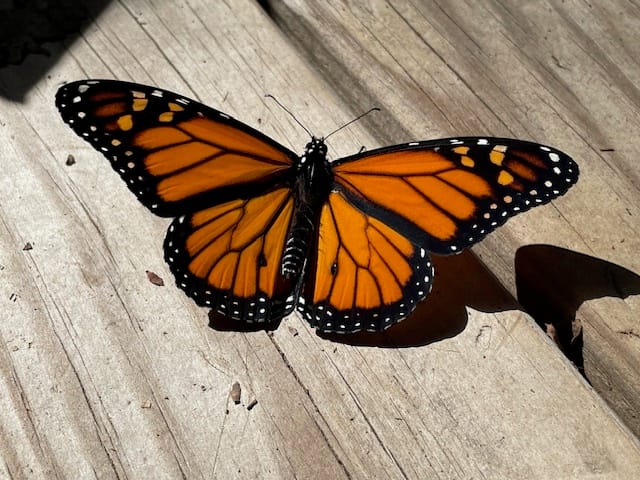
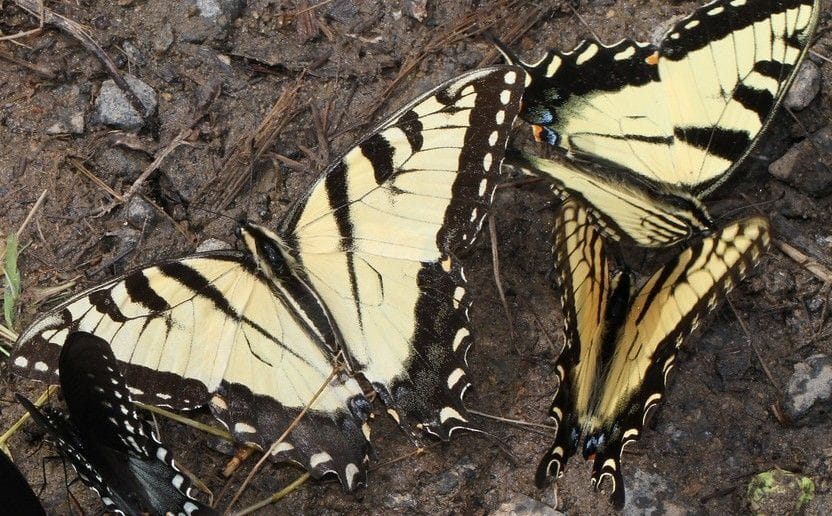
Appalachian Tiger Swallowtail (image: Flickr)
⏩FAST FACT
The Appalachian Tiger Swallowtail (Papilio appalachiensis) that flits around the higher ridges of the Smokies isn’t just another yellow‑and‑black beauty—it’s a hybrid species, descended from an ancient cross between the Eastern and Canadian tiger swallowtails that went on to become its own distinct butterfly.
🦋WINGED MARVELS

Pipevine Swallowtail
Butterflies might look fragile, but they begin life as tiny eggs hard‑glued to a host plant. Within days, a caterpillar hatches and eats nonstop, sometimes increasing its weight thousands of times in a week. All that energy gets banked for the ultimate makeover. Inside the quiet chrysalis, most tissues liquefy and reassemble into a completely new creature ready to fly.
Look closely at a butterfly’s wings and you’ll see thousands of overlapping scales, each about as thick as a human hair. Some scales hold pigments, yet many rely on microscopic ridges that bend light into iridescent blues and greens—a trick called structural color. Engineers study those same ridges when designing ultra‑efficient solar panels and fade‑proof paints.
Butterflies explore the world with their feet. Sensory hairs on the feet act like mobile taste buds, letting a female “lick” a leaf before laying an egg or helping an adult decide if a muddy puddle holds enough minerals to sip. Add in ultraviolet vision and a long, flexible proboscis, and they’re perfectly equipped for nectar missions.
Because they’re cold‑blooded, butterflies need sunshine to power up. On cool mornings, you’ll catch them resting with wings spread out, absorbing just enough heat for liftoff. Some species even tilt or close their wings midday to avoid overheating—nature’s own adjustable thermostat.
Beyond their beauty, butterflies serve as environmental barometers. Their short life cycles and sensitivity to habitat changes make them early indicators of ecosystem health. When scientists notice population swings in places like the Smokies, it often signals larger shifts in climate, plant diversity, or pesticide use, reminding us that those fluttering wings carry messages for us all.
Don’t miss the magic! Check out my pop-up shop for cool nature merchandise. Open https://smoky-mtn-nature-lady.printify.me in a new window.
📝WORD UP
A chrysalis is the hard, bare shell where a butterfly caterpillar changes into a butterfly. The pupa typically hangs from a leaf or twig. Most moth caterpillars spin a cocoon around their pupa. The moth's chrysalis hides inside this cozy wrapper.
So, butterflies pupate in a chrysalis; moths tuck their pupa inside a silky cocoon.
🏔️NATURE CHALLENGE: RALLY FOR THE MONARCHS
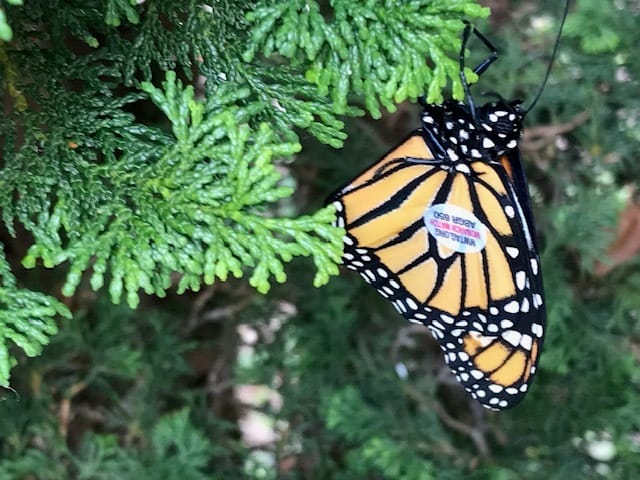
A tagged monarch butterfly
Monarch butterflies are more than orange‑and‑black eye‑candy—they’re tireless pollinators that help keep wildflower meadows (and the crops we love) blooming across North America.
In the Great Smoky Mountains, you’ll spot them gliding over milkweed in sunny clearings (like Cades Cove) each summer, sipping nectar while spreading pollen from aster to goldenrod. Their presence is a quiet sign that a local ecosystem still has the right mix of native plants and open space.
However, the Eastern monarch population has plunged by about 80% since the mid‑1990s, landing the species on the International Union for Conservation of Nature Red List of endangered migratory species. The most recent winter census in Mexico showed a welcome 99% rebound from last year’s historic low, but the occupied forest area is still well below the decade average—proof that one good season doesn’t erase a long‑term slide.
Part of what makes monarchs so vulnerable is the very feat that makes them famous: a multigenerational, 2,000‑mile journey. The great‑great‑grandchildren of Smokies monarchs will glide all the way to the oyamel fir forests of central Mexico, roost by the millions through winter, then begin the trek north again each spring, laying eggs on milkweed as they go and handing the baton to the next generation. Any missing link—prairie turned parking lot, pesticides wiping out milkweed—breaks the chain.
Here in the Smokies, the most straightforward way to help is to plant native milkweed (common milkweed and butterfly weed are great choices) plus late‑blooming nectar plants like asters and goldenrod so southbound adults can refuel in September. Skip the pesticides and mow meadow edges only after frost so milkweed pods can reseed. Even a postage‑stamp garden becomes a monarch “waystation” when it offers host plants, nectar, and a sunny, wind‑sheltered corner.
Further down the migration corridor—through Tennessee, Georgia, Texas, and into Mexico—people can make the same habitat pledge. Community groups are restoring roadside milkweed, farmers are leaving weedy fence lines, and schools are tagging butterflies to track their routes. If you travel, choose pollinator‑friendly lodging, avoid buying illegally logged oyamel‑fir wood, and support groups like Monarch Joint Venture and Journey North that fund habitat work on both sides of the border.
Small actions add up. A single milkweed plant in your yard could launch hundreds of caterpillars; a neighborhood’s worth can fuel an entire migratory wave.
Take the Nature Challenge this month: plant three native milkweeds, log your first monarch sighting on Journey North, and share a photo of your butterfly garden with the hashtag #MonarchsInTheMountains. Let’s turn the Smokies—and every stop along the flyway—into an orange‑and‑black welcome mat.
Here are a few of my favorite 🦋butterfly-related things . . .
Butterflies rarely perch far away, so a pair of close‑focus binoculars lets you study wing scales without spooking your subject.
A durable, color‑coded field guide that fits in a daypack and covers everything from swallowtails to skippers can be invaluable. I love this one!
A clip‑on macro lens turns any smartphone into a wing‑detail camera—perfect for sharing IDs on iNaturalist.
Butterfly decor is fun for all seasons. This wall art is so cute.
A puddler is an excellent addition to the garden, drawing butterflies, bees, and even birds!
🍃CONSERVATION STATION
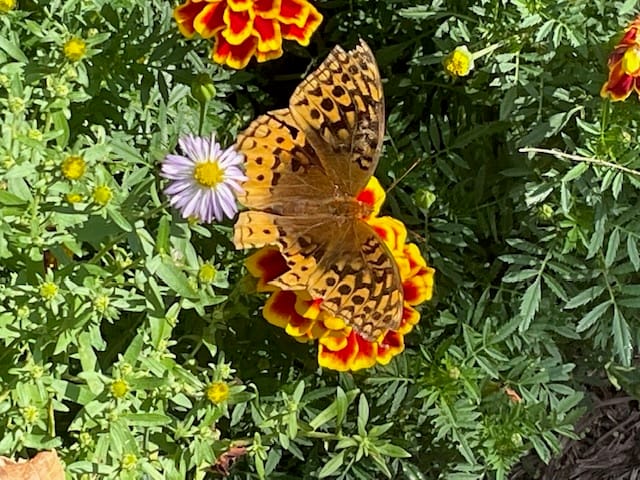
Great Spangled Fritillary on Marigold
Artificial light at night (ALAN) does more than brighten your yard—it scrambles the internal clocks and navigational cues that migrating insects and birds rely on. Studies have found that monarch butterflies roosting under a porch or streetlights lose their sense of time, take wing at the wrong hour, and start the next day already disoriented from their route. Other research shows that many flying insects become trapped in bright halos, burning energy they need for reproduction or falling prey to nocturnal hunters.
The good news: a quick bulb swap makes a big difference. Insects are most attracted to short‑wavelength (blue/white) light, so replacing standard LEDs with warm “amber” or yellow bug bulbs can cut insect attraction by 50% or more. At the same time, motion‑sensor fixtures ensure lights shine only when needed. If you can’t change the bulb, shield the lamp so it points downward and add a timer to switch it off after 11 p.m. during peak migration hours.
Try a Night‑Light Knockdown for one month. Swap or shade your porch lights, then keep a simple log of backyard sightings—how many moths are on the wall, how many monarchs at dawn, even how many bats circling the yard. Share your before‑and‑after counts (and photos!) on iNaturalist using #NightLightKnockdown. Your darker sky could become a welcome beacon for butterflies and other important migratory species.
🎥VIDEO CONNECTIONS
💬QUOTE-A-PALOOZA
We delight in the beauty of the butterfly, but rarely admit the changes it has gone through to achieve that beauty.
— Maya Angelou
📖READ ALL ABOUT IT
In Bicycling with Butterflies, Sara Dykman pedals 10,201 miles from Mexico to Canada and back, shadowing the monarch migration while turning every roadside stop into a lesson in ecology and perseverance. Her patched‑together bike journey, rich with farmers, schoolkids, and swirling orange wings, shows how one rider's grit can help save a fragile species. I think it's an inspiring, ⭐⭐⭐⭐⭐ eco‑memoir of adventure and hope. Highly recommend! | 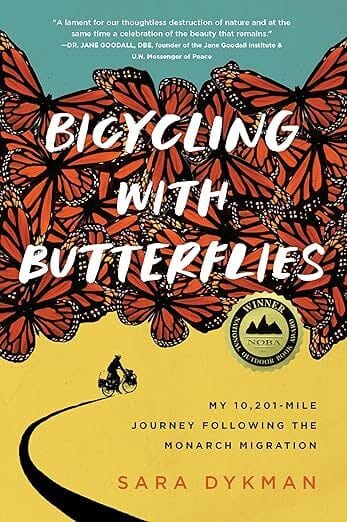 |
Keep your radar tuned for the next flutter!

Was this fabulous newsletter from the Smoky Mountain Nature Lady forwarded to you? Join the nature community in the Smoky Mountains. Subscribe today!
Before you go, may I ask a favor?
If you purchase through my Amazon affiliate links, I may earn a small commission at no extra cost to you.
Reply